
Marcus Chen
24 · Graphic Designer · OLIPOP buyer
"I think I tell the functional story because it's defensible. Nobody can argue with gut health science. The 'I was early to this brand' story just sounds insecure now that it's everywhere."

Research Study 004 · Better-For-You Beverages
Across Liquid Death, OLIPOP, and Spindrift, purchase motivation splits 2:1 identity signaling over functional benefit — but what happens after mass retail distribution erodes the exclusivity that made the signal worth sending?
TL;DR — Four Signals
By the Numbers
Morpheus Lite Personas
Marcus Chen
24 · Graphic Designer · OLIPOP buyer
"I think I tell the functional story because it's defensible. Nobody can argue with gut health science. The 'I was early to this brand' story just sounds insecure now that it's everywhere."
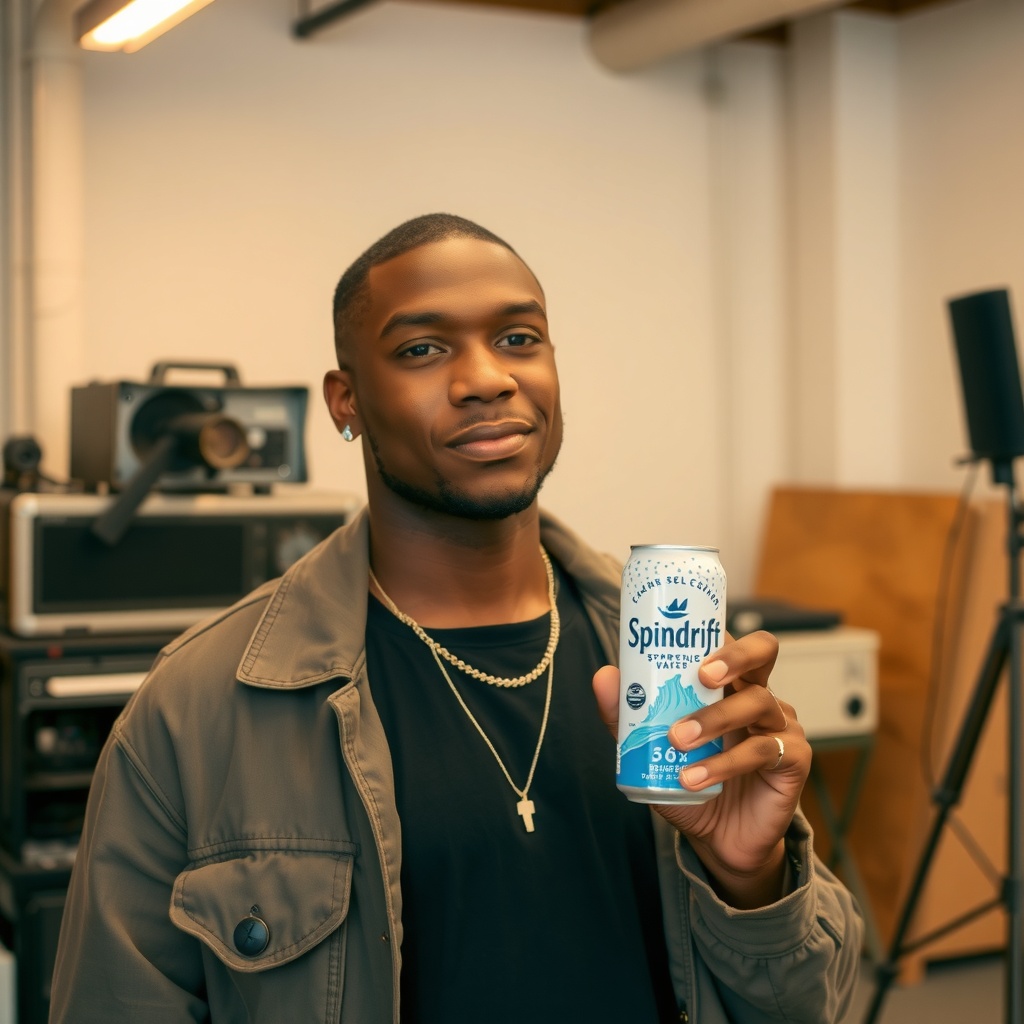
Jasmine Rodriguez
29 · Marketing Strategist · Liquid Death buyer
"So am I buying the can as much as the water? Probably yes. I just resist framing that as 'signaling anti-mainstream values' because that feels like the brand's flattering story about its own consumers."
Devon Jackson
32 · Event Producer · Liquid Death early adopter
"For someone at my level of visibility in these spaces, being caught holding one in 2024 is actually worse than holding a Pellegrino. It marks you as someone who's still performing a rebellion that's been fully absorbed."
Primary Cross-Brand Finding
Cross-Brand Finding
Mass Distribution Doesn't Dilute the Signal — It Inverts It
Across all three simulations, the mechanism that drove initial purchase — legible social identity — became the mechanism driving exit or narrative substitution post-mass-retail. For Liquid Death, the inversion is complete: the most culturally embedded early adopters are experiencing active brand embarrassment specifically because of their identity-consciousness, not despite it. For OLIPOP, the substitution is conscious: buyers know they're replacing "I was early" with "gut health science" and have no other publicly acceptable story. For Spindrift, ingredient transparency functions as the venue-portable identity signal that prevents the inversion — the only structural defense against scale-driven signal decay.
Simulation Hypotheses
Brand: Liquid Death
"Repeat purchase motivation cites identity or peer perception at least 2x more frequently than taste or hydration."
The 2:1 identity-over-function ratio confirmed without friction. The unexpected finding is structurally more damaging: mass retail distribution has made the can a signifier of Whole Foods-tier conformity rather than counter-cultural credibility, and the highest-signal buyers are now experiencing active brand embarrassment — not in spite of their identity-consciousness, but because of it.
Brand: OLIPOP
"Mainstream retail distribution shifts early-buyer purchase motivation from identity to functional benefit language."
All three OLIPOP personas demonstrated conscious real-time substitution — replacing "I was early to this" with prebiotic and fiber benefit claims. One participant — a marketing manager who professionally designs campaigns exploiting this exact mechanism — narrated the substitution while executing it. The behavior is not self-deception; it is the absence of a socially acceptable alternative narrative once exclusivity collapses.
Brand: Spindrift
"Ingredient transparency messaging drives purchase intent at mass retail specifically — mechanism is venue-contingent identity protection."
Ingredient claims function as pre-loaded social scripts — ready-made, factually grounded justifications that neutralize status anxiety of being seen buying premium at Target or Walmart. "It's the only one made with actual juice" is a sentence buyers can say out loud at checkout that makes the purchase socially legible without requiring the store environment to do the validating work.
Once the visual novelty decays — once it's in every hotel minibar and airport kiosk — the social signal collapses. And I've been watching that happen in real time.
— Devon, Liquid Death early adopter
Consumer Voice
"I'm not going to lie to you — holding that can looked right. It fit the visual grammar of where I was and who I was trying to be in that moment."
— Marcus, Liquid Death buyer
"This is engineered rebellion. That's not the same thing as actual rebellion. They're at Target. They did a collab with Martha Stewart. The company is worth over a billion dollars."
— Marcus, Liquid Death buyer
"I'm sitting here a little uncomfortably aware that I might be doing exactly that — reconstructing my rationale because the original one doesn't hold the same weight when it's flanked by Cap'n Crunch at eye level."
— Jessica, OLIPOP buyer
"The science became my lead when the identity signal got cheaper."
— Alex, OLIPOP buyer
"When I'm at Whole Foods and I'm picking up a six-pack, the environment is doing some of the work for me. The store itself is saying: we already pre-screened this."
— Madison, Spindrift buyer
"The ingredient truth is the thing I'd quote to justify the purchase. Without it being front and center, I lose my own internal argument for why this matters."
— James, Spindrift buyer
So What
Map the Inversion Curve Before the Next Channel Decision
Liquid Death and OLIPOP both crossed a distribution threshold where social signal flipped from exclusive to conformist. That threshold exists for every challenger brand. Identify where it sits for the next retail channel before signing agreements that cannot be unwound.
Early Adopters Don't Leave When They're Bored — They Leave When They're Embarrassed
The Devon-archetype churn pattern is driven by identity visibility, not product quality or price. Retention strategies built around loyalty rewards or taste experience will not capture this segment — the exit is social, not sensory.
Ingredient Claims as Social Cover Are a Distribution Advantage Worth Engineering
Spindrift's functional differentiator ("real juice") functions as a venue-portable identity signal that Liquid Death and OLIPOP lack. Any better-for-you beverage brand planning mass retail expansion should audit whether its primary purchase motivation survives a store environment that can't pre-screen buyers.
Risk Flags
The Founding Cohort Radiates Signal — and Signal Decay
Devon's social circle watches his choices. When he stopped carrying Liquid Death, that registered. The seed buyer who drove cultural legitimacy is also the seed buyer whose exit signals the inversion to aspirational buyers who follow their cues. Losing Devon doesn't cost one customer — it costs the next 50.
Functional Claims Have Verification Ceilings
Spindrift buyers believe the juice claim but can't verify it. A credible challenge to the sourcing or ingredient accuracy would not just end brand loyalty — it would collapse the specific social script that makes the purchase legible. Third-party audited supply chain transparency is not a trust-building exercise; it's the foundation the social cover architecture stands on.
Related Studies